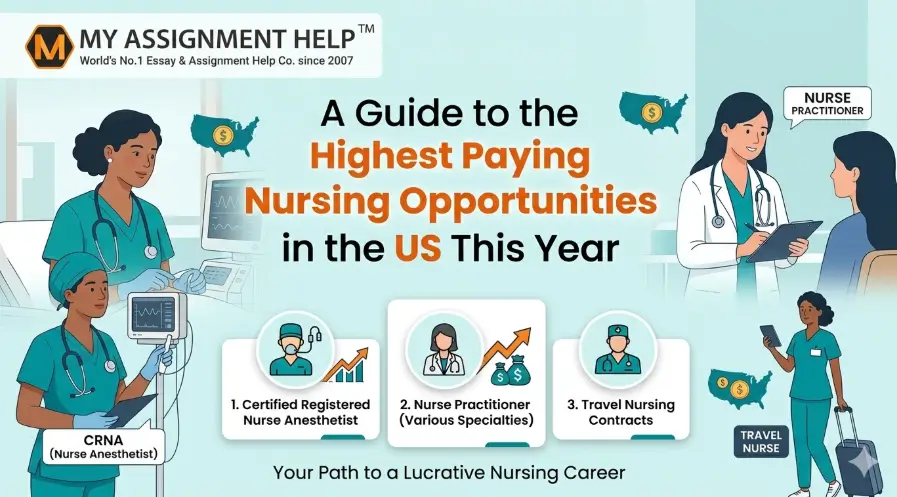
The healthcare landscape in 2026 continues to undergo a seismic shift. While the demand for healthcare professionals remains at an all-time high, the distribution of compensation is far from uniform. For nursing professionals, “where” you practice is often just as significant as “how” you practice. This year, a combination of aging demographics, regional cost-of-living adjustments, and state-specific legislative funding has created a highly competitive market for Registered Nurses (RNs) and Nurse Practitioners (NPs).
Navigating these opportunities requires a strategic approach. It is no longer enough to simply look at the gross salary; smart practitioners are now evaluating “real-time earnings”—the value of a paycheck after accounting for state taxes and housing indices. Whether you are a recent graduate or a seasoned veteran, understanding the geographical nuances of the US nursing market is essential for maximizing your career ROI.
As the complexity of healthcare education increases, students entering the field often find themselves overwhelmed by the rigorous documentation and clinical case studies required for licensure. For those balancing clinical rotations with academic requirements, seeking professional guidance through services like nursing assignment help uk can provide the necessary structural support to maintain high academic standards while focusing on hands-on practice.
The National Nursing Economic Outlook
According to the Bureau of Labor Statistics (BLS) and recent 2026 healthcare labor reports, the median annual wage for Registered Nurses has seen a 4.2% increase year-over-year. However, the true story lies in the “Salary-to-Cost-of-Living” ratio. States like California and Hawaii boast the highest raw numbers, but when adjusted for the Consumer Price Index (CPI), states in the Midwest and South often offer better purchasing power.
Top 5 Highest Paying States for Nurses (Raw Salary)
- California: Remains the leader, with specialized RNs in metropolitan areas like San Francisco and San Jose often exceeding the $150,000 mark. The presence of strong nursing unions and mandated staffing ratios continues to drive up both pay and workplace desirability.
- Washington: Driven by the tech-wealth-infused healthcare systems in Seattle and Bellevue, Washington has climbed the ranks, offering competitive packages that include significant sign-on bonuses.
- Oregon: Similar to its northern neighbor, Oregon’s commitment to healthcare accessibility and mental health services has created a high-paying niche for psychiatric and geriatric nurse specialists.
- Massachusetts: Home to some of the world’s leading research hospitals, the Boston corridor remains a high-paying hub, particularly for nurses involved in clinical trials and specialized surgical units.
- Alaska: To combat the “brain drain” and the challenges of rural healthcare, Alaska offers substantial geographic differentials and hazard pay that place it among the top earners.
Regional Deep Dive: Where the Value Lives
The West Coast Dominance
The West Coast continues to set the benchmark for nursing compensation. California’s dominance is not merely a result of inflation but a reflection of high-acuity patient needs and a robust legislative framework. In 2026, we are seeing a trend where nurses migrate to “border cities” in Nevada or Arizona to take advantage of California wages through travel nursing while maintaining lower cost-of-living residences.
The Emerging Southeast Hub
States like North Carolina and Florida are seeing the fastest growth in nursing roles. While the base pay may be lower than in the Northeast, the lack of state income tax in Florida and the booming biotech sector in North Carolina’s Research Triangle make these states highly attractive for long-term wealth building.
To manage the transition from academia to these high-stakes professional roles, many students rely on myassignmenthelp to bridge the gap in their technical writing and research capabilities. Utilizing experts to do my homework allows aspiring nurses to focus on the specialized certifications—such as CCRN or PCCN—that truly move the needle on their starting salary.
The Skill-to-Salary Bridge: Specializations That Pay
Earning a high salary is not just about geography; it is about the “Stackable Credentials” you bring to the table. In 2026, the following specializations are commanding the highest premiums:
- Nurse Anesthetists (CRNA): Consistently the highest-paid nursing profession, with median salaries in many states exceeding $200,000.
- Informatics Nurse Specialists: As hospitals integrate advanced AI diagnostics, nurses who can speak the language of data are seeing a 15% pay premium over general floor nurses.
- Gerontology Nurse Practitioners: With the “Silver Tsunami” hitting its peak, states with high retiree populations (Arizona, Florida, South Carolina) are paying top dollar for elderly care expertise.

The “Real Value” Index: Adjusted for Cost of Living
When we look at the Cost of Living Adjusted (COLA) Nursing Index, the rankings change significantly. For instance, a nurse earning $85,000 in Texas may have more discretionary income than a nurse earning $120,000 in New York City.
| State | Average Salary (RN) | Adjusted for COL | Purchasing Power Rank |
| Texas | $84,000 | $92,500 | High |
| Georgia | $81,000 | $89,000 | High |
| New York | $105,000 | $78,000 | Low |
| Illinois | $82,000 | $85,500 | Medium |
Source: 2026 Healthcare Economic Research Institute (HERI)
Key Takeaways for Nurses This Year
- Go West for Raw Totals: If you are looking for the highest possible gross number on your W-2, California and Washington remain the clear winners.
- Look to the South for Savings: Texas and Tennessee offer the best balance of competitive pay and low living expenses.
- Certify to Diversify: Generalists are seeing stagnant wages; specialists in Informatics, Anesthesia, and Geriatrics are seeing record-breaking offers.
- Leverage Travel Nursing: Even with the post-pandemic stabilization, “Internal Travel” contracts within large hospital systems offer 20-30% higher pay than staff roles.
Academic Integrity and Professionalism in Nursing
The path to these high-paying roles begins with a solid educational foundation. The shift toward E-E-A-T (Experience, Expertise, Authoritativeness, and Trustworthiness) in the medical field starts in the classroom. Nurses are expected to produce evidence-based research and demonstrate critical thinking from day one. Utilizing professional academic support ensures that your foundational knowledge is built on accurate, peer-reviewed data, setting the stage for a successful clinical career.
See also: Boost Your Growth 645056542 Digital Platform
Frequently Asked Questions (FAQ)
Q: Which state has the highest demand for nurses in 2026?
A: California and Florida currently have the highest number of vacancies, though for different reasons. California’s demand is driven by strict staffing ratio laws, while Florida’s is driven by a rapidly aging population.
Q: Is travel nursing still profitable this year?
A: Yes, but the “gold rush” of 2021 has evolved. Instead of nationwide travel, “Regional Travel” or “Stipend-based” contracts within 100 miles of home are the most profitable and sustainable options in the current market.
Q: Does a BSN significantly increase my salary compared to an ADN?
A: While the starting salary might only differ by $5,000–$8,000, a BSN is a prerequisite for the high-paying leadership and specialized roles mentioned in this guide. Most Magnet hospitals now require a BSN for all new hires.
Q: How do state taxes affect nursing pay?
A: Significantly. Nurses moving from California to Washington or Texas may see an immediate 7-10% “raise” in their take-home pay simply due to the absence of state income tax, even if the gross salary is slightly lower.
Author Bio: Sarah Jenkins, Senior Academic Consultant
Sarah Jenkins is a Senior Content Strategist and Academic Consultant at MyAssignmentHelp. With over a decade of experience in healthcare administration and SEO-driven medical research, Sarah specializes in bridging the gap between academic theory and labor market reality. She holds an MSc in Nursing Education and frequently contributes to global forums regarding the E-E-A-T framework in healthcare documentation. When she isn’t analyzing nursing labor trends, Sarah mentors students on navigating the complexities of advanced clinical certifications.
References
- Bureau of Labor Statistics (2026). Occupational Outlook Handbook: Registered Nurses.
- Healthcare Economic Research Institute (2026). The National Cost-of-Living Nursing Index.
- Journal of Nursing Regulation (2025). The Impact of Staffing Ratios on Compensation Trends.
- National League for Nursing (NLN) 2026 Workforce Report.